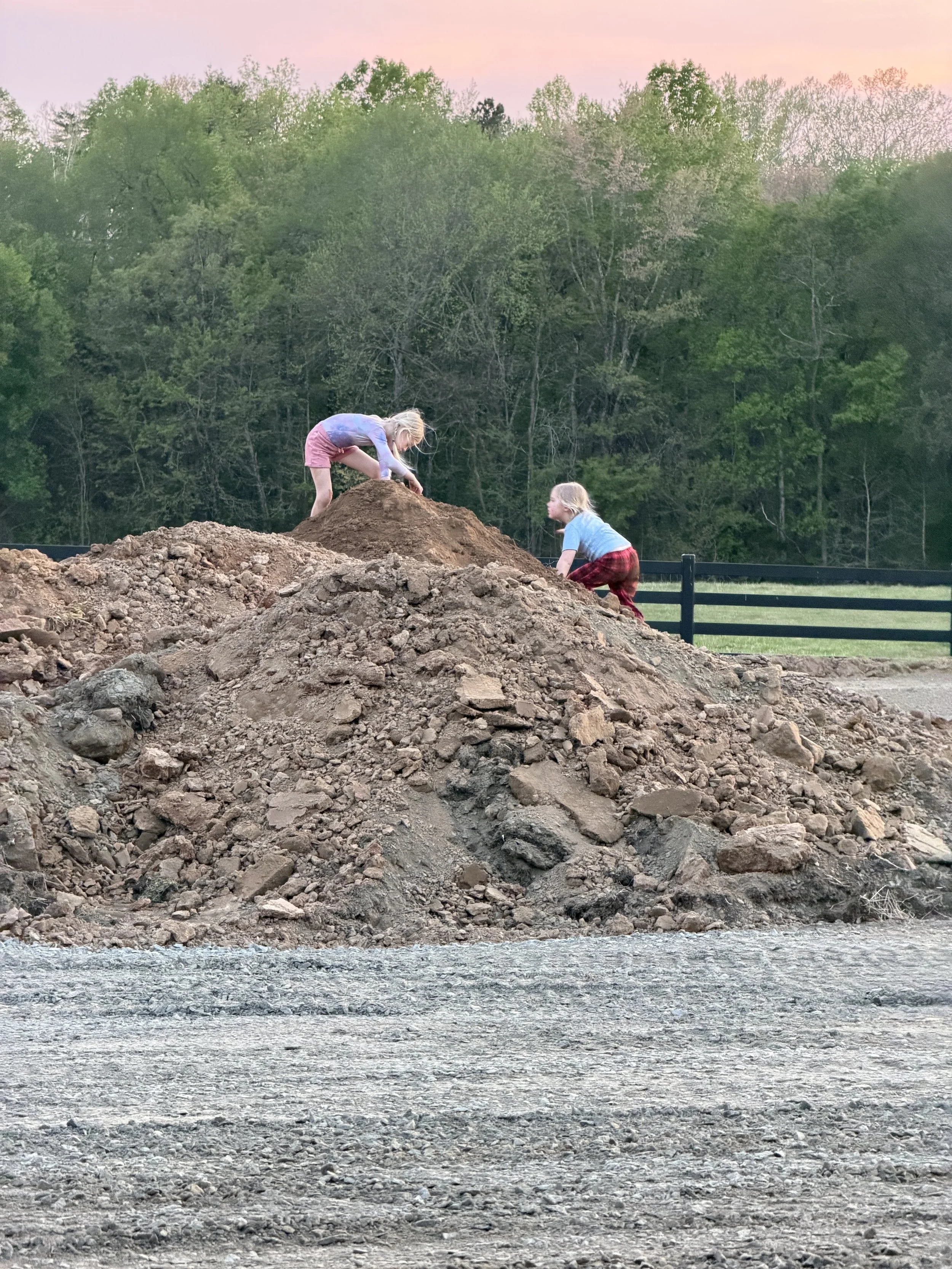
Tips for Getting Dirty With Your Kids (Garden Edition)
By mid-June, the rules start to loosen.
The days stretch longer than planned. Bare feet replace sneakers. The back door opens and closes a hundred times before lunch. Dirt appears on the floor before you even realized everyone went back outside. Early summer has a certain kind of chaos to it. Warm, bright, loud, and alive.
And if you’re anything like me, your first instinct is to manage it.
To wipe hands before they touch the couch, to line shoes back up, and to clear out the rock pile forming by the porch.
As moms, we’re wired to keep things contained. But outside, especially this time of year, control slips quickly. And maybe that’s not a problem to solve.
On the farm, June is when everything asks to be touched. Soil is warm. The garden is stretching taller by the day. The kids are barefoot more often than not, following curiosity instead of instruction. It’s busy and messy and full.
And some of the best memories live right there in the dirt.
Tip 1: Embrace the “Stuff” They Love
Rocks. Sticks. Mud. Especially rocks.
Try not to steer their play toward what looks productive or meaningful to you. Let go of that urge. Truly.
If they want to fill their pockets with gravel or carefully line stones up along the porch, let it happen. These small fascinations are how children slow down enough to notice the world around them. The weight of a stone. The temperature difference between sun-warmed and shaded dirt. The way one rock fits perfectly in the palm of their hand.
We don’t need to entertain them. We don’t need to turn everything into a lesson.
Dirt is often where the best noticing happens.
On our farm, everything beautiful starts in the soil. It’s not clean. It’s not contained. But it’s alive, and so are they when they’re allowed to explore it freely.
Tip 2: Dress for the Mess
Old shoes. Hand-me-downs. Zero expectation that anything makes it out clean.
The fastest way to cut outdoor play short is worrying about stains. I know because I’ve lived it.
When my oldest daughter was about a year old, I was determined to keep her clothes pristine so they could be passed down. The result was a child who was afraid to enjoy herself. Dirt on her shoes felt like failure. She would actually cry if something got messy, and that was my wake-up call.
I changed my attitude almost overnight. Mud, worms, and puddles became welcome. And suddenly, she relaxed. She stayed outside longer. She took creative risks. I had to physically pull her out of puddles in our gravel driveway.
That version of childhood felt right.
When you remove the “don’t get dirty” rule, kids settle deeper into play. Decide ahead of time that today’s clothes are sacrificial. Less correcting. More watching.
Tip 3: Join for Five Minutes
You don’t need an entire afternoon.
You don’t need to clear your schedule or create a Pinterest-worthy backyard activity.
Five intentional minutes is enough.
I used to set a timer when it was time to play Barbies. I would put five minutes on my watch. Fully present, no multitasking, and my daughter soaked up every second of it.
The same idea applies outdoors.
Sit on the ground. Dig for a minute. Look closely at what they’re holding. Copy them. Ask one small question. Or don’t ask anything at all.
Presence matters more than duration.
In a season that feels overstimulating and loud, those small pockets of connection anchor everyone. Even you.
Tip 4: Let Nature Set the Pace
Go outside with no agenda, no lesson plan.
Take a walk and let them lead. Stop where they stop. Kneel when they kneel. Invest your time in whatever has captured their attention, even if it seems insignificant to you.
Let the creek be the creek.
Let the garden bed be explored, not managed.
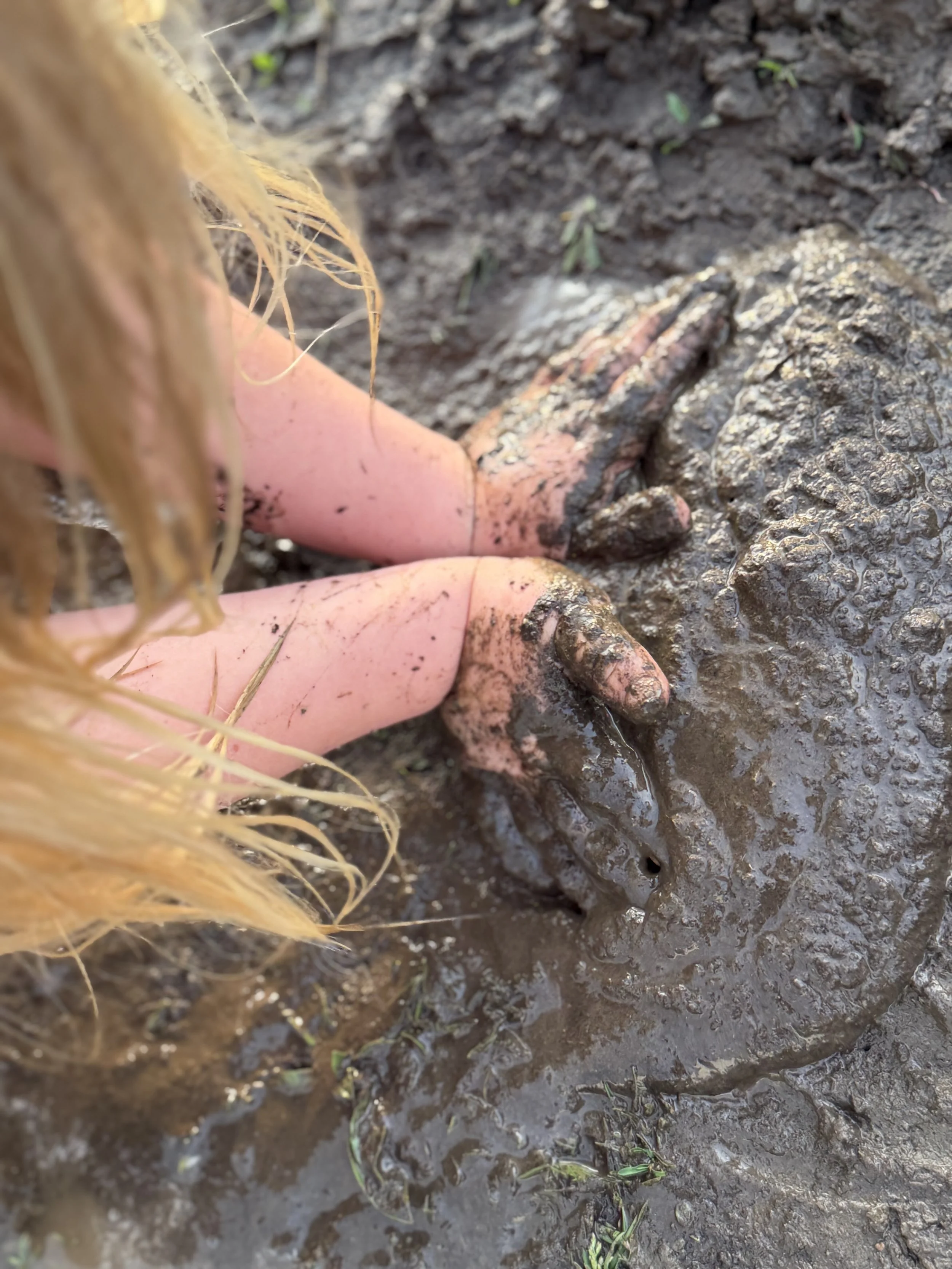
Let the mud be squished and stomped and examined.
Not every moment needs to teach something. When children are allowed to move slowly and follow their curiosity, patience builds quietly underneath. Confidence grows without announcement.
Calm doesn’t come from structure alone. It comes from space.
And summer gives us more of that space than we realize.
Tip 5: Leave the Evidence Until the End
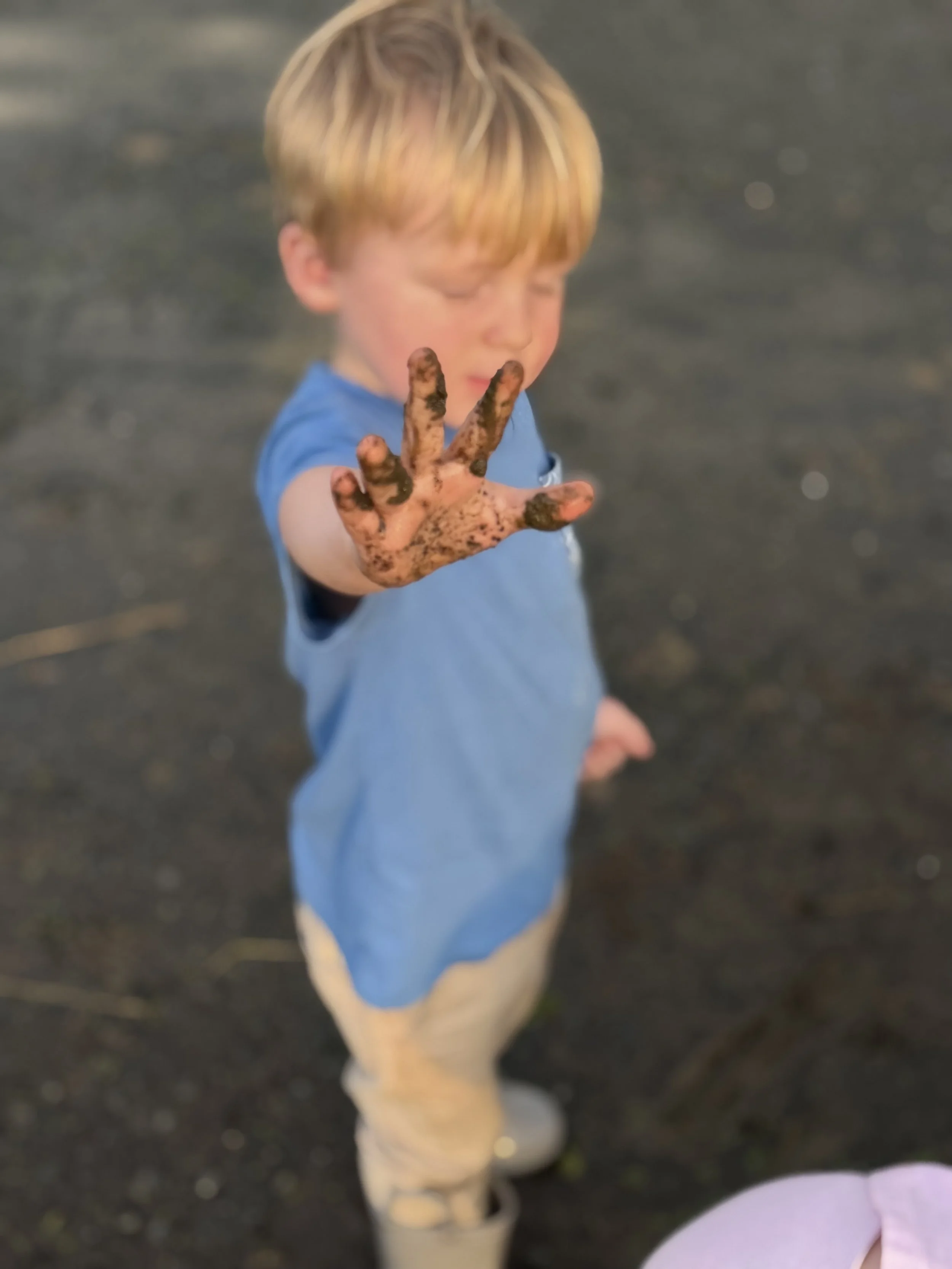
Mud on hands means something good happened.
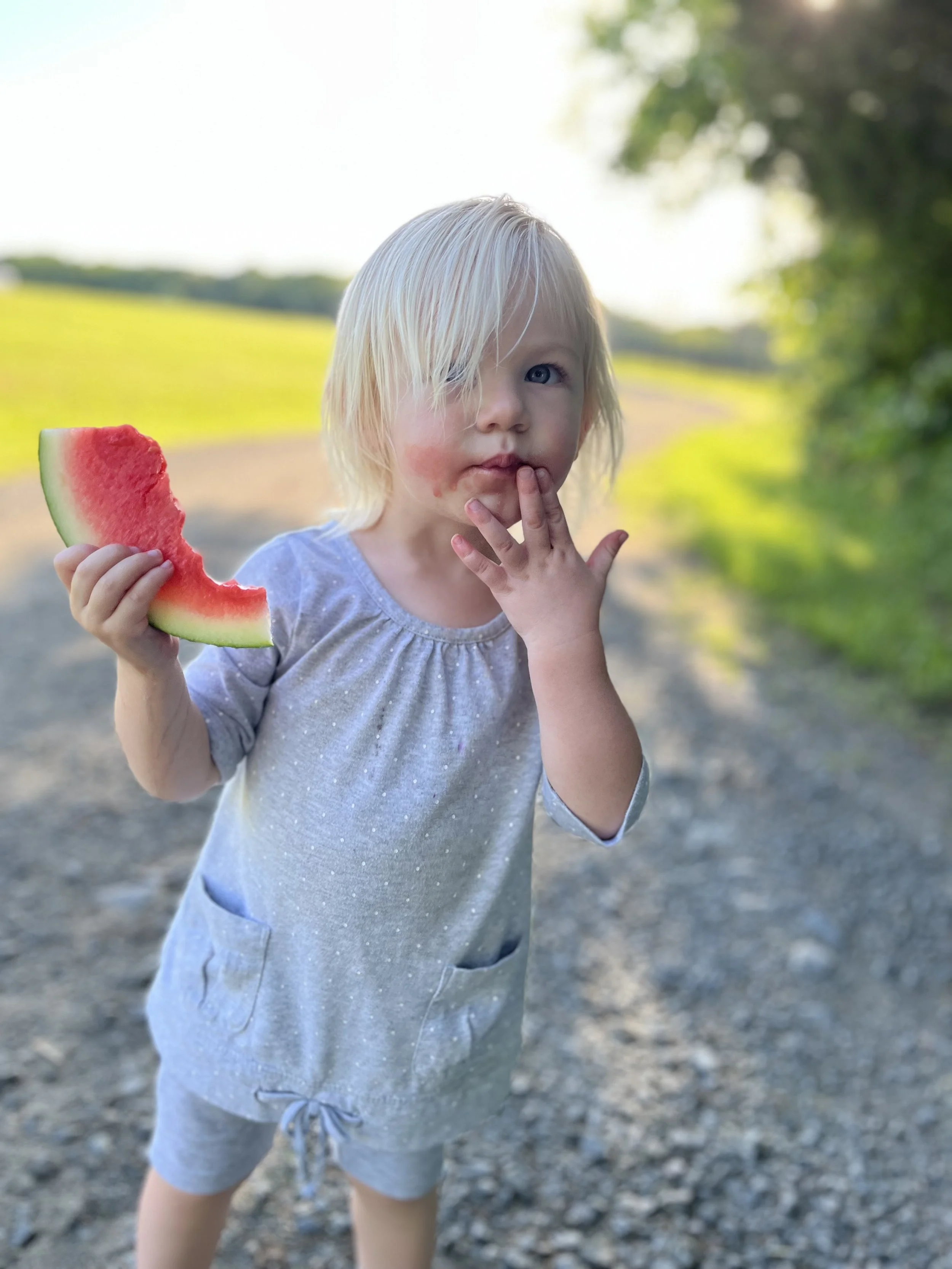
A watermelon-stained shirt tells the story of June afternoons. Dirt under fingernails is proof of freedom.
Resist the urge to clean everything immediately. I know it’s hard. Watching the mess spread to clothes, hair, and even ears can test every ounce of patience you have.
But let it stay a little longer. Through the walk back to the house, through snack time, through one more laugh. The cleanup can wait. Connection shouldn’t.
These messy, barefoot days are building something steady underneath. Independence. Confidence. Comfort in their own bodies. Trust in their curiosity.
On our farm, we rely on rich, living soil to grow strong, seasonal flowers for our community. Week by week, what’s blooming changes. Nothing is rushed. Nothing is forced. Growth follows its natural rhythm.
Kids are no different.
They don’t grow best in sterile, controlled environments. They grow in warmth. In freedom. In the kind of early summer chaos that feels overwhelming in the moment but grounding in hindsight.
Dirt and all.