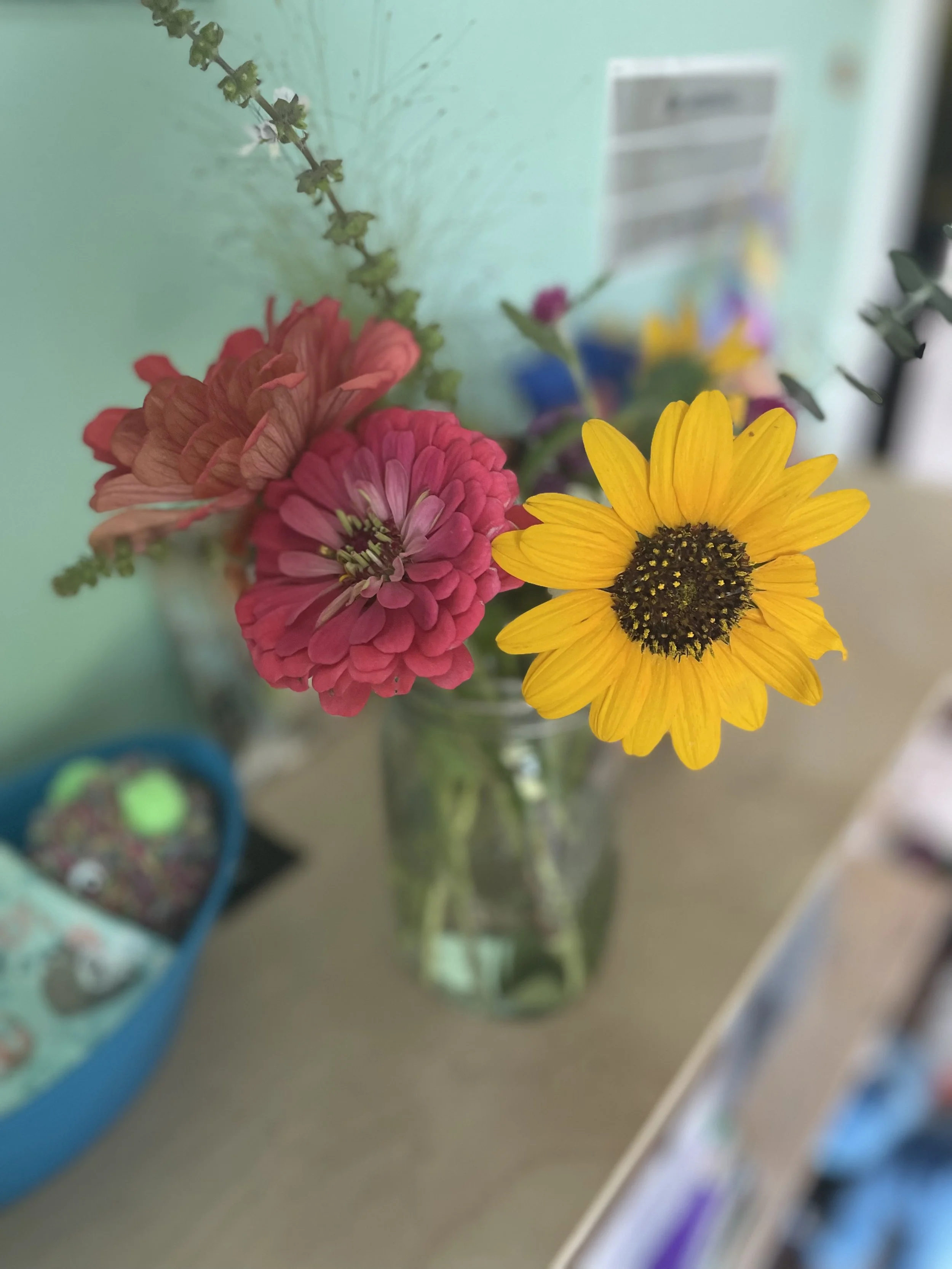
Flower Arranging With Children: Letting Go of Perfect
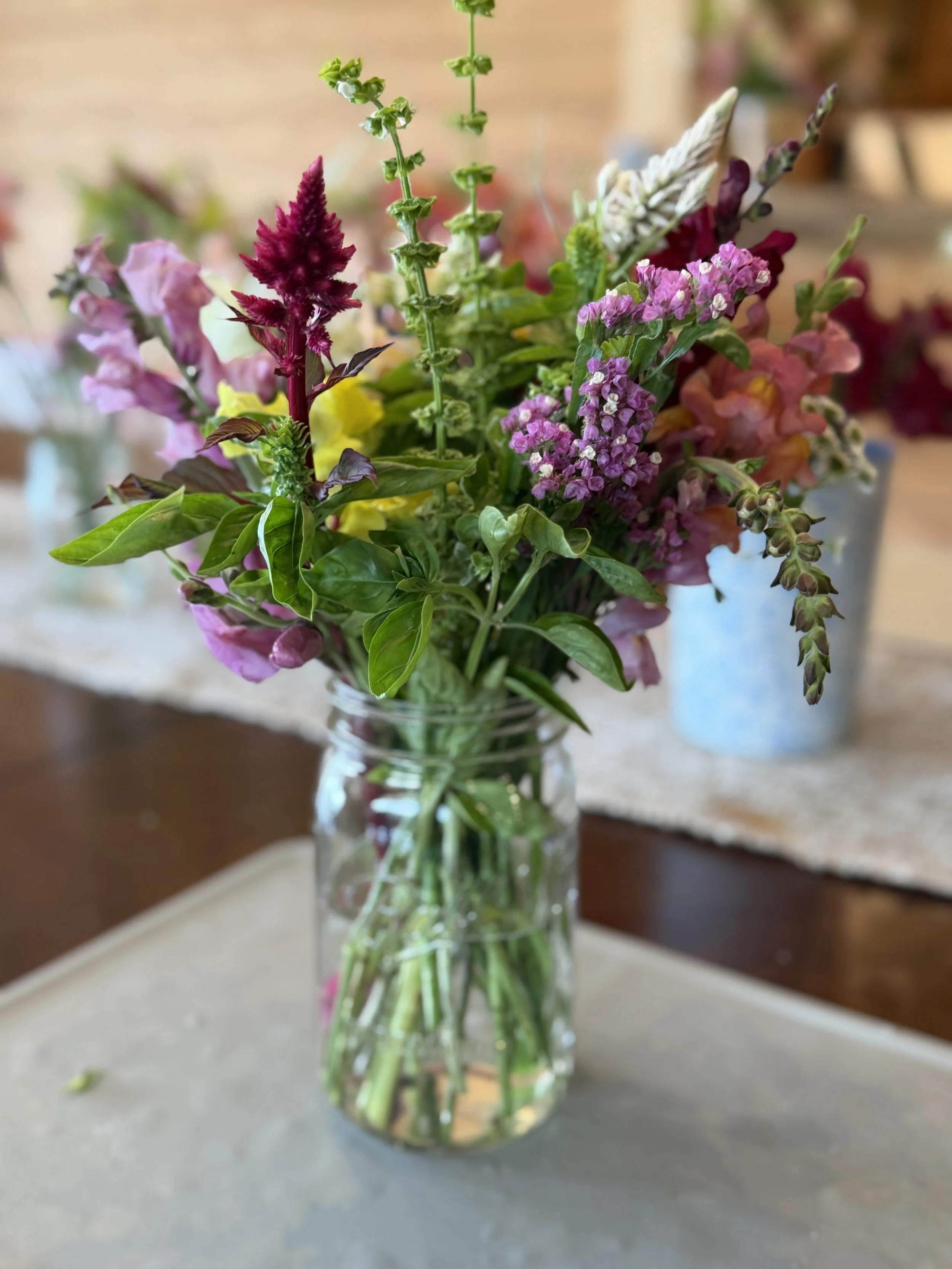
There are very few things children do “perfectly.”
And honestly, I hope they never start.
As with almost any activity involving children, my first piece of advice is always the same.
Let go.
Let go of the picture you created in your mind before you started. Let go of the expectation that it will be neat, efficient, or Pinterest-worthy. Let go of wondering whether they’re “doing it right.”
When it comes to flower arranging with kids, that means letting go of pretty and embracing what’s meaningful instead.
It all starts in the garden.
Let them wander. Let them get dirty. Let them stop every few steps because they found another flower they absolutely must have. And then actually let them choose.
Even if they pick colors that clash.
Even if they insist on using the flower with half its petals missing.
Even if they proudly hand you the shortest stem in the entire garden.
Admire their confidence in making bold choices.
Children don’t see flowers the way adults do. They aren’t worried about color palettes or focal flowers or balance. They notice textures, funny shapes, bright colors, fuzzy stems, and blooms that remind them of butterflies or sunshine. Their arrangements become little reflections of how they see the world.
Carry that same attitude all the way inside.
As they begin placing flowers into their vase, resist the urge to quietly “fix” things. Instead of arranging for them, watch their creativity unfold. What they create may not look the way you would have done it, but that’s exactly the point.
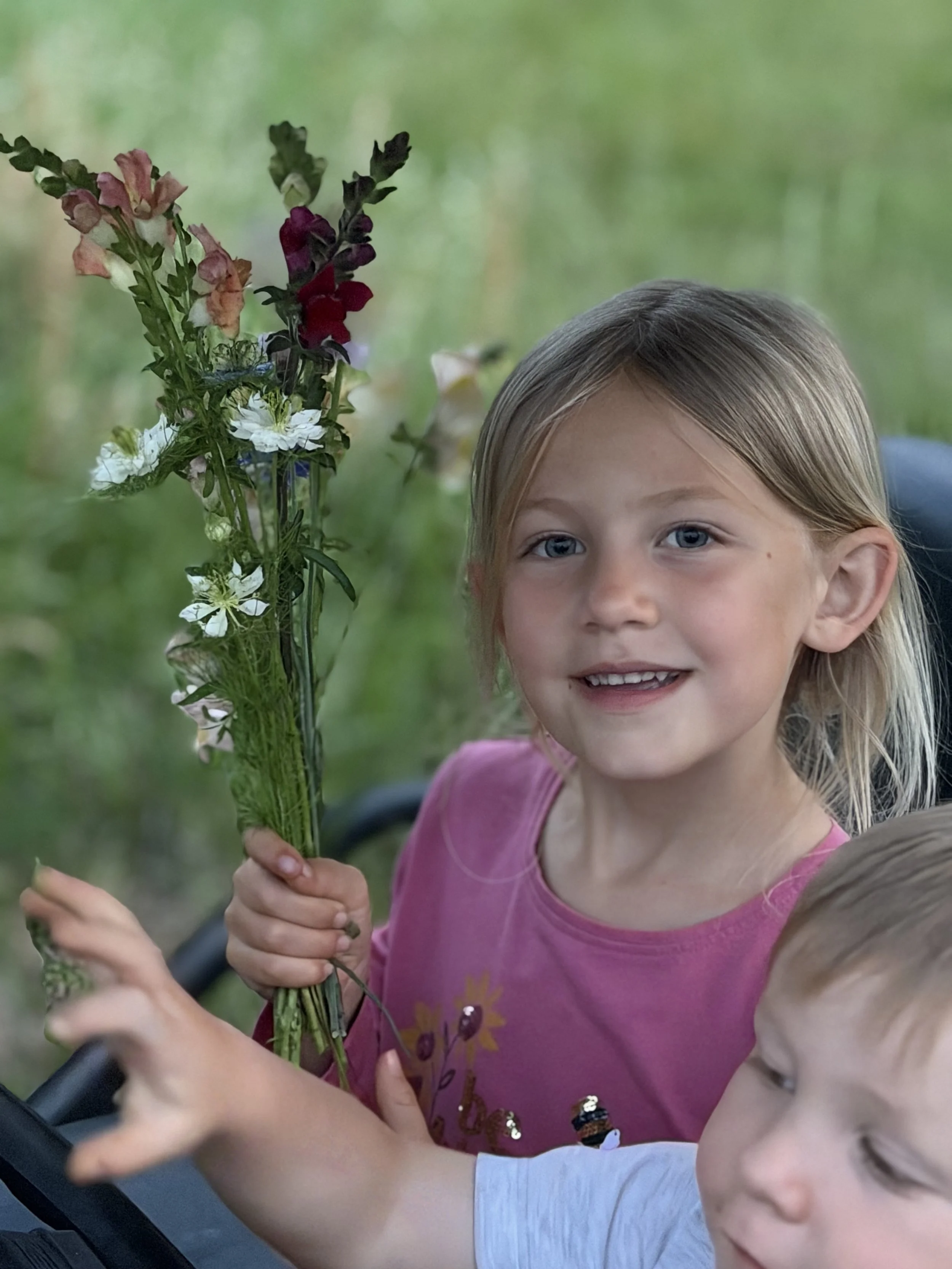
A Few Simple Tips Before You Begin
Like any activity with young children, a little preparation makes everything more enjoyable.
Here are a few things that have worked well for us on the farm.
1. Choose an easy vessel.
A mason jar is hard to beat. The wide opening makes arranging simple, they’re sturdy enough to avoid tipping over, and they’re just the right size for little hands.
2. Match the flowers to the vase.
Smaller flowers are often easier for young children to manage than oversized blooms. If you’re harvesting yourself, try choosing a mix of focal flowers, fillers, and greenery with stems that fit comfortably inside your chosen container.
3. Prepare stems for your child’s age.
If your child is too young to use snips safely, simply cut flowers ahead of time in a variety of lengths.
If they’re learning, make it something you do together. I like to hold the stem and ask where they think it should be cut. Then we switch jobs for the next flower. Before long they’re doing more and more on their own.
4. Start with greenery.
Adding greenery first gives children a simple framework to build from and helps the arrangement naturally support the flowers they add afterward.
5. Encourage curiosity instead of correcting.
Rather than saying, “That flower doesn’t go there,” try asking:
“What made you pick this one?”
“Which flower is your favorite?”
“Tell me about this arrangement.”
You might be surprised by what you learn.
Children often have wonderfully thoughtful reasons behind choices that adults would have overlooked completely.
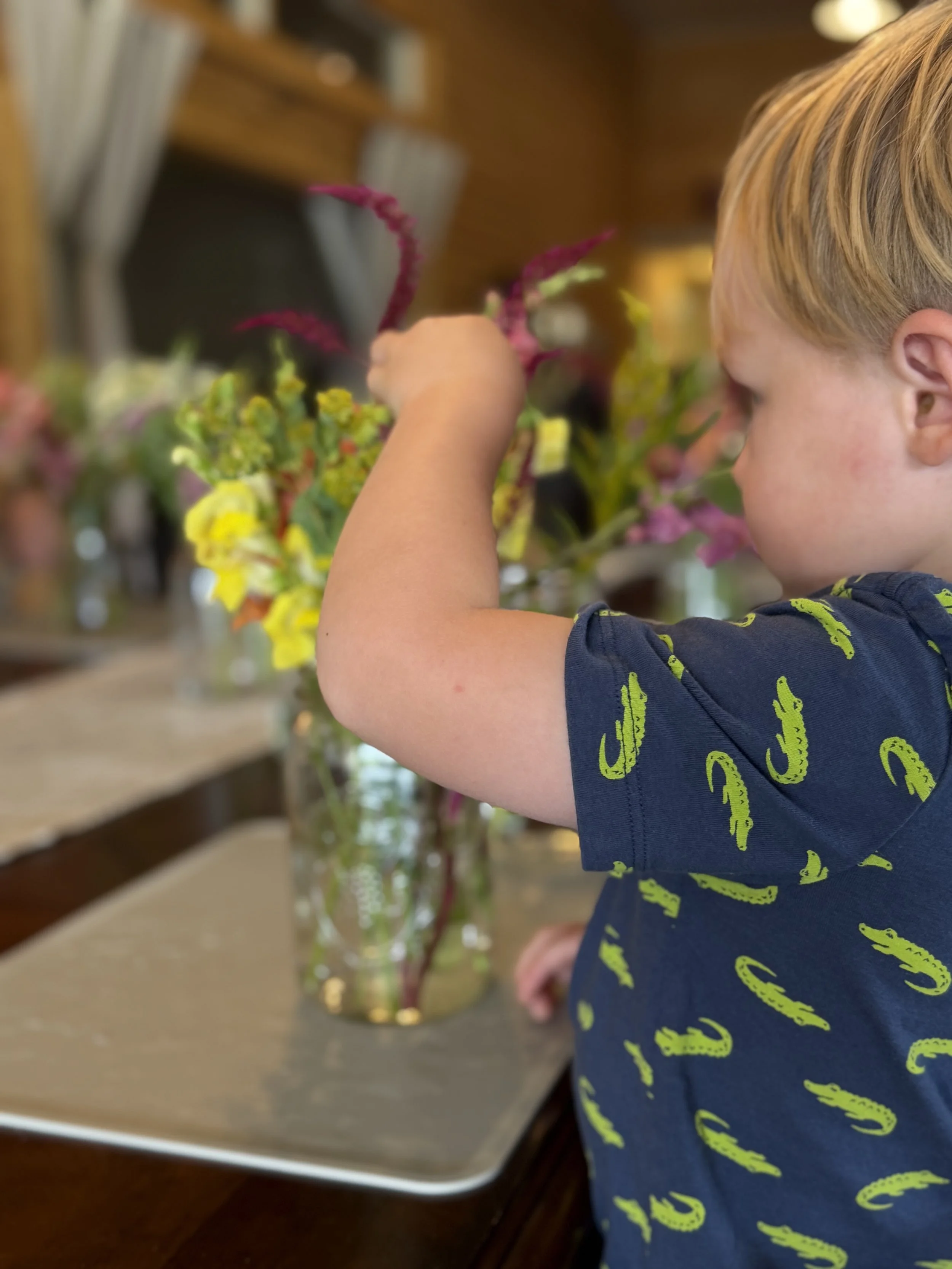
Let Them Discover
When it comes to the arrangement itself, encouragement matters far more than instruction.
Interestingly, neither criticism nor excessive praise is really necessary.
Simply notice.
“I love how many colors you chose.”
“You found so many different shapes.”
“That flower makes me smile.”
Their arrangements aren’t meant to be symmetrical. They aren’t supposed to look like something you’d buy from a florist. They’re little snapshots of their imagination.
And yes, sometimes a flower is simply too tall.
As adults, we already know it’s going to tip over.
Your child might not.
Let it.
Some of the best lessons happen naturally. When they notice the flower falling out, they’ll probably decide all on their own that maybe it needs to be shorter. That discovery sticks far better than if we’d stepped in before they ever had the chance.
Allowing children to solve small problems gives them ownership over their work. It tells them, “I trust you.”
That confidence grows far beyond flower arranging.
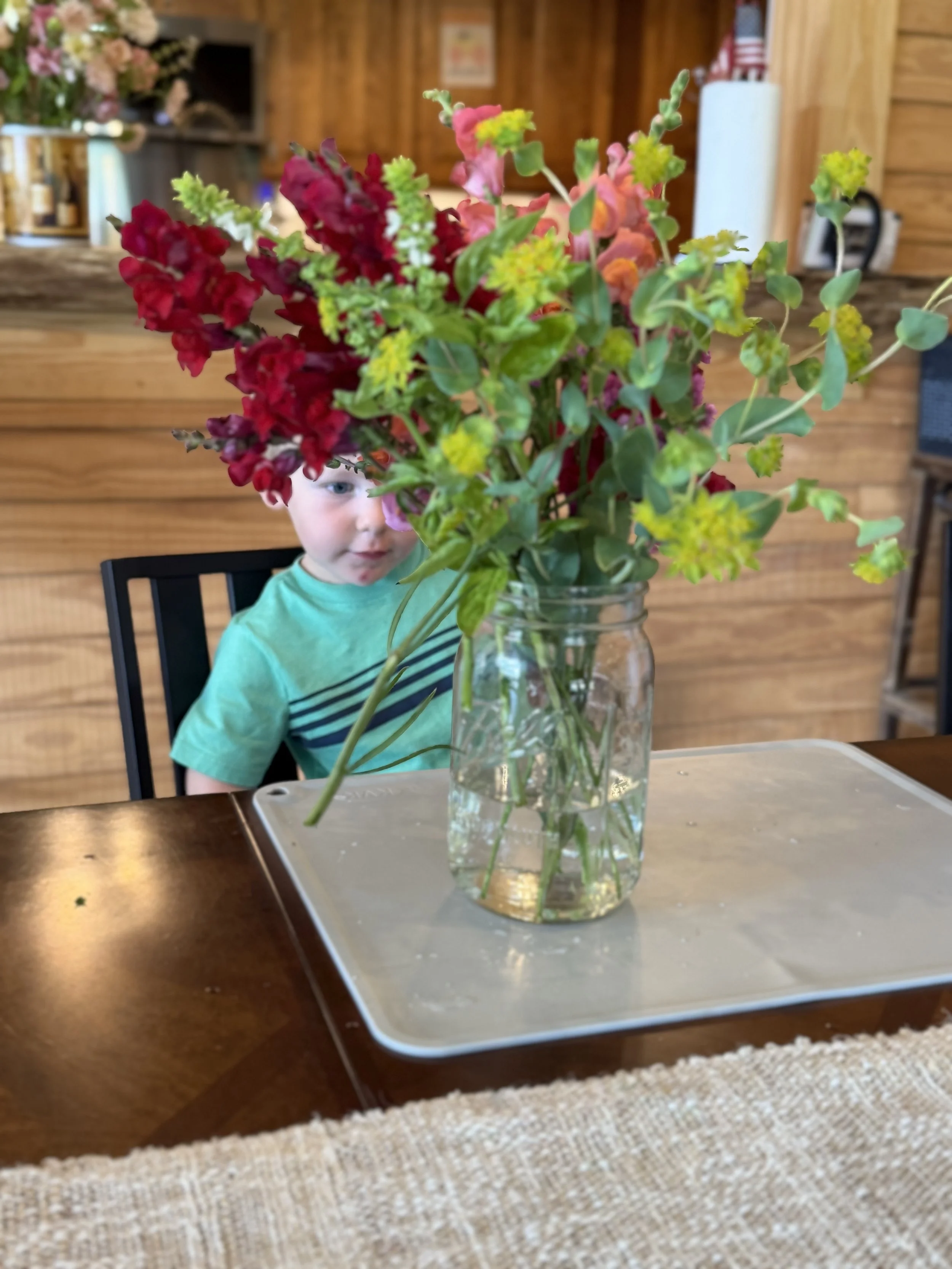
The Flowers Aren’t Really the Point
By the time you’re finished, you’ll have an arrangement.
It may be wonderfully balanced.
It may be delightfully crooked.
Either way, that’s not really what you’ll remember.
You’ll remember muddy feet walking through the garden.
Tiny hands proudly carrying armfuls of flowers that were much too big.
The conversations that happened while you clipped stems together.
The laughter when someone accidentally made a flower disappear inside the vase.
The project isn’t really about the project at all.
It’s about creativity.
It’s about slowing down long enough to notice beauty together.
It’s about connecting with nature and with each other in a way that doesn’t require batteries, schedules, or perfect outcomes.
One of the greatest gifts we can give our children is our presence. When we approach something as simple as arranging flowers with genuine joy instead of focusing on the finished product, we’re teaching them that the experience itself has value.
Summer bouquets were never meant to be perfected.
They’re meant to be enjoyed.
If you stand back and admire a wildflower meadow from a distance, it looks almost flawless.
Step into it, though, and you’ll see chewed leaves, bent stems, flowers missing petals, and insects buzzing from bloom to bloom. Nature has never depended on perfection to be beautiful.
Neither do our children.
And neither do the moments we create with them.