Spring has a way of waking something up in all of us. After months of quiet, cold days, those first warm rays of sunshine and tiny green buds feel like permission to dream big. As soon as the garden starts stirring, it’s hard not to picture everything all at once. Daffodils, tulips, sunflowers, dahlias, armfuls of color filling every corner of the house.
I do this every year, too. The minute spring sunshine hits my face, I’m imagining sunflowers on the kitchen table. And every year, I have to gently remind myself that sunflowers won’t be the first to arrive. That urge to expect everything at once is completely natural, especially after a long winter. But flower season isn’t meant to be rushed. The real beauty comes from experiencing it in layers, one bloom at a time.
While we tend to loosely associate certain flowers with certain seasons, tulips with early spring or sunflowers with late summer, the truth is that flower timing is much more specific than that. Nature follows a remarkably precise set of cues. Temperature, day length, soil conditions, and even nighttime lows all play a role in telling a seed when it’s time to grow.
Some flowers actually prefer a cool start and shorter days. Others won’t even think about blooming until the soil has warmed and the days are long and bright. These differences don’t just determine when a flower germinates, they also affect how tall it grows, how long it blooms, and how well it holds up in a vase.
Sunflowers are a great example. Different varieties respond differently to day length. If a sunflower seed is planted too late in the season, when days are getting shorter, it will still bloom but often on a much shorter stem. This happens across many flower types. Timing isn’t about control, it’s about cooperation. When a flower is planted in the window that suits it best, it thrives.
This is where flower farming becomes both art and science. Over the years, I’ve learned to work with these natural rhythms, so the flowers are at their happiest when they bloom. That’s why, as a customer, you don’t need to worry about the details. You can simply enjoy what’s blooming right now.
To help make sense of how the season unfolds, it helps to think of flowers in phases rather than dates. Weather shifts year to year, but the general rhythm stays consistent.
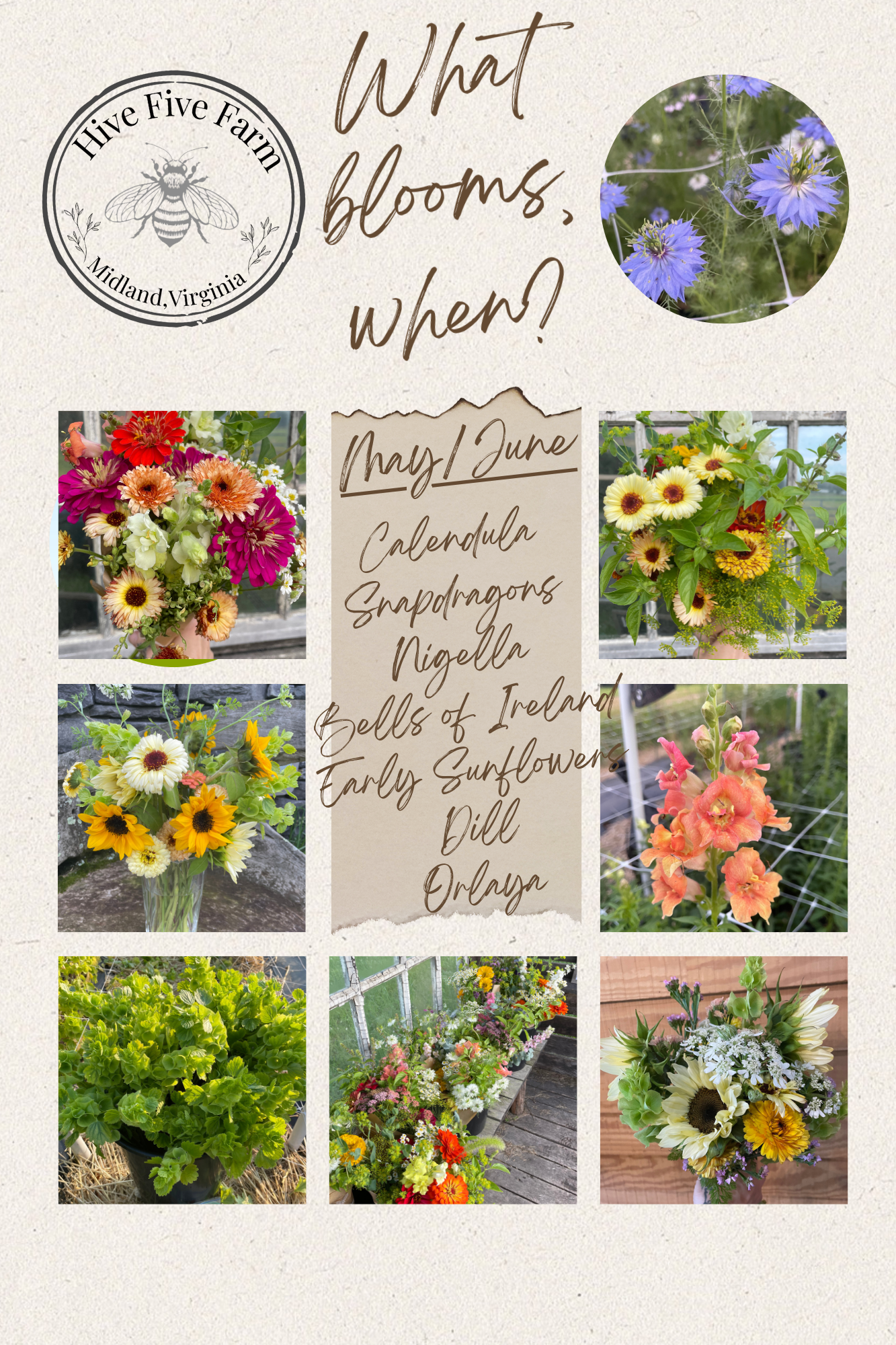
Early season blooms are the first brave signs of spring. These flowers tolerate cooler temperatures and shorter days. Think daffodils and tulips, along with statice, snapdragons, bells of Ireland, calendula, and early sunflower varieties. These blooms feel fresh and hopeful, often softer in color, and they set the tone for the season.
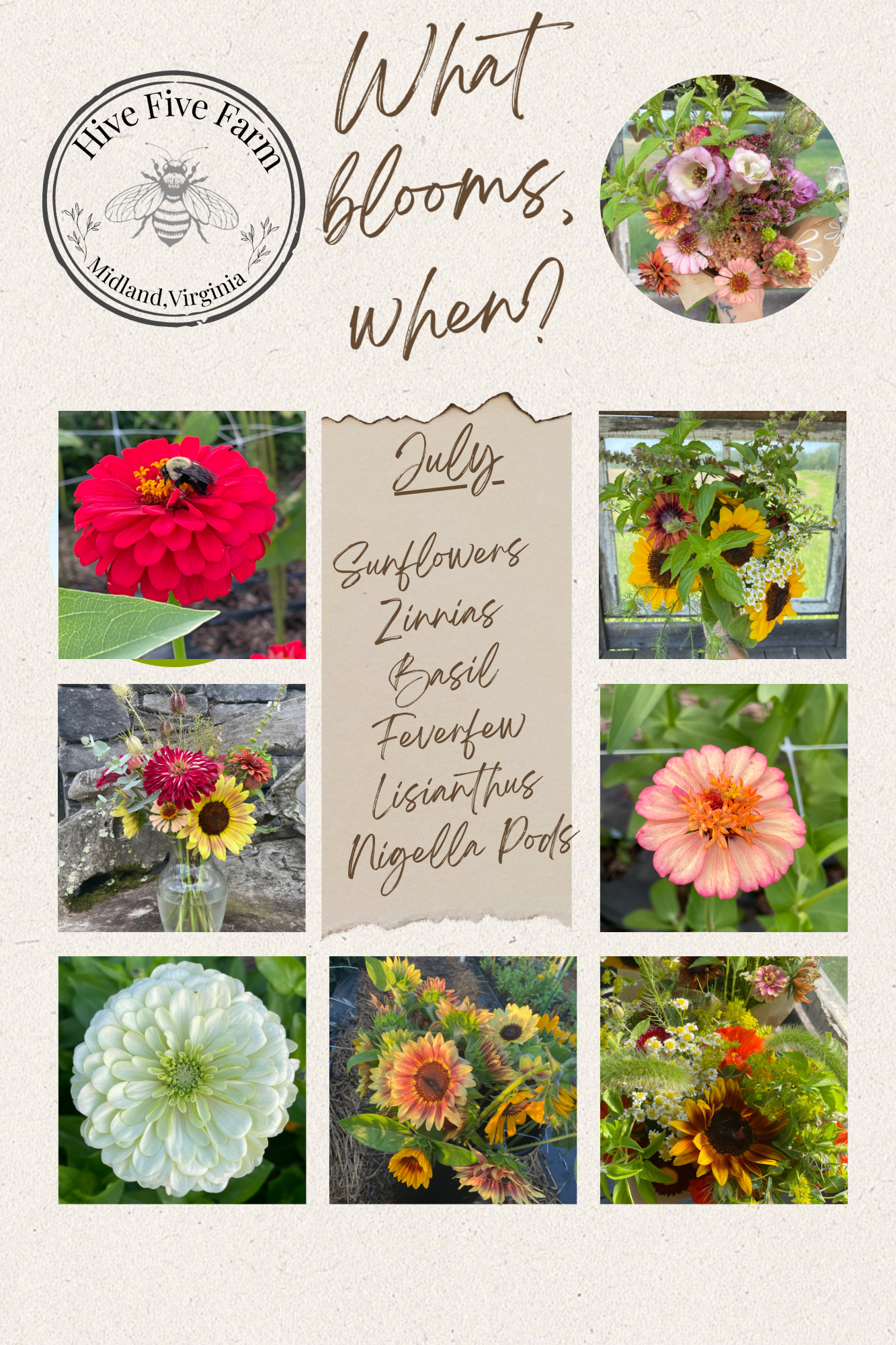
Mid-season flowers arrive as the days grow longer and the soil warms. Early sunflower varieties continue, joined by feverfew, yarrow, lisianthus, bupleurum, basil, and early zinnias. This is when bouquets start to feel fuller and more layered, with stronger stems and richer textures.
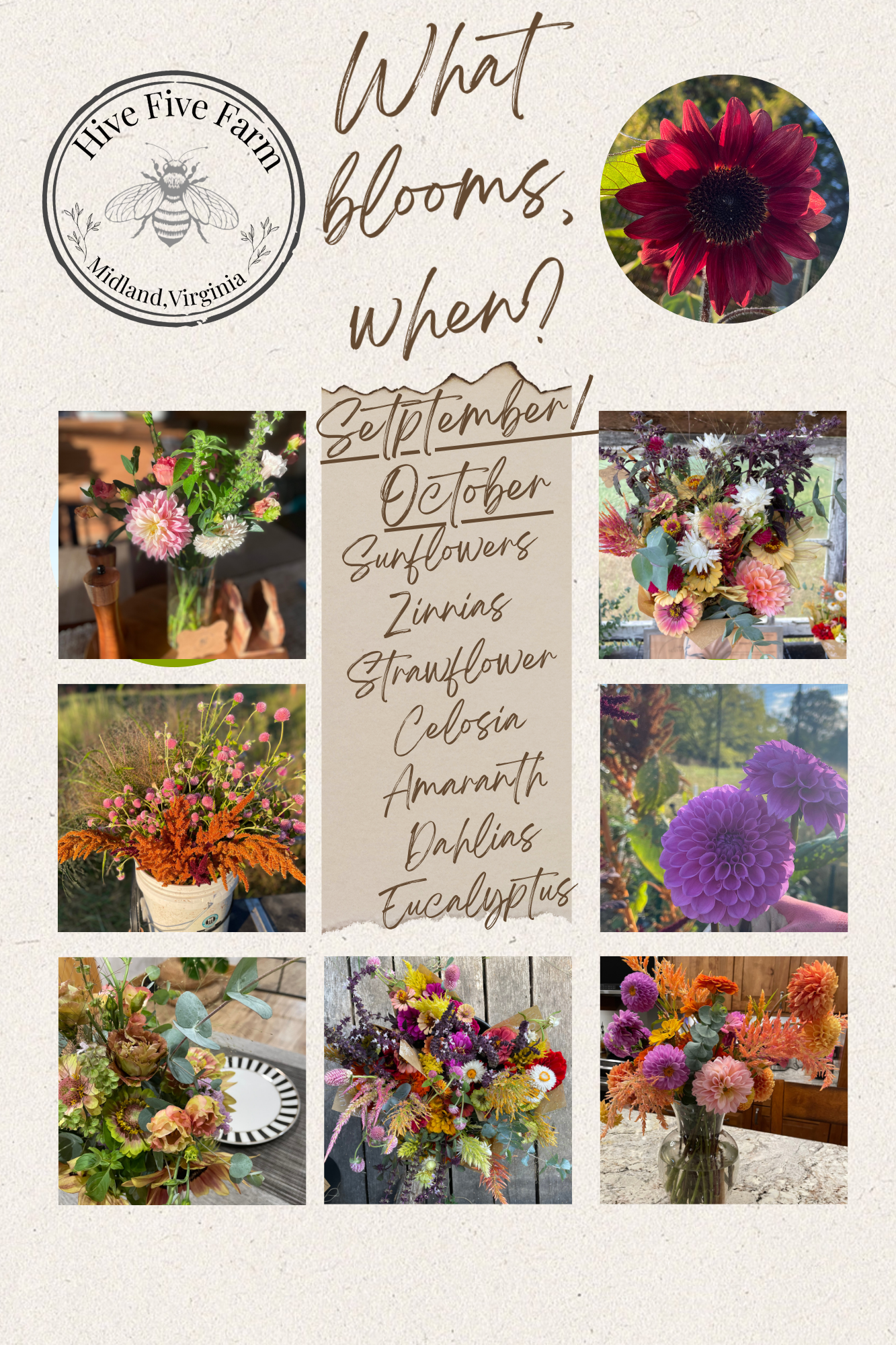
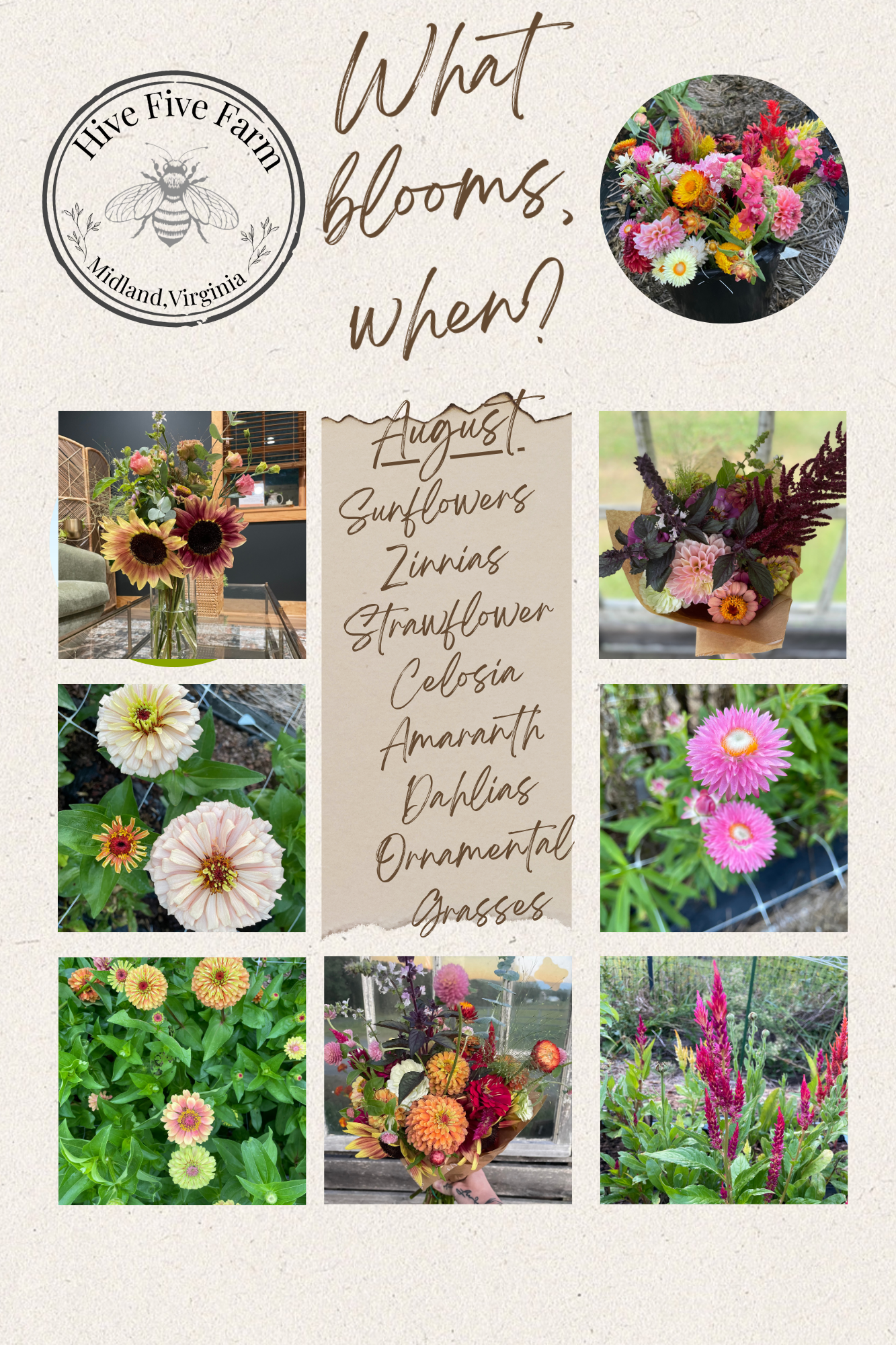
Late-season blooms thrive in heat and long days. Sunflowers reach their full stride, alongside zinnias, dahlias, eucalyptus, amaranth, celosia, basil, mountain mint, and ornamental grasses. These flowers are bold, abundant, and dramatic, reflecting the fullness of late summer and early fall.
Seeing the season this way helps shift expectations. Instead of waiting impatiently for everything at once, you begin to notice what’s unfolding right now.
If you’ve ever noticed flowers in a grocery store that seem out of season, you’re not imagining it. Modern transportation allows flowers to be flown across the globe, which means tulips in winter or sunflowers in early spring aren’t unusual on store shelves.
But that convenience comes at a cost. Flowers that are grown overseas are cut days or even weeks before they reach you. By the time they arrive in your home, a significant portion of their vase life is already gone. I always say if it was flown in from another country, you’ve already lost a week of enjoyment.
Local flowers follow the natural rhythm of the land they’re grown on. They’re cut at the right moment, often within a day of reaching your table. That’s why they’re taller, brighter, longer lasting, and incredibly fragrant. Nothing compares to the smell of truly fresh flowers. When you choose local, you’re not just supporting a small family farm, you’re choosing quality you can see and feel.
One of my favorite parts of growing flowers with this rhythm is how naturally it translates into lessons for our children. Learning to notice what’s blooming right now encourages patience without forcing it.
Yes, I’m eager for sunflowers. But while we wait, I can fully appreciate the silky peach petals of calendula or the quiet beauty of early spring blooms. That awareness is something children absorb so easily when we model it for them.
Instead of focusing on what’s coming next, we learn to enjoy what’s in front of us. Anticipation becomes something joyful rather than frustrating. There’s comfort in knowing more is coming, without rushing past the present moment.
We live in a world built around instant gratification. When everything is available all the time, it’s easy to lose the sweetness of waiting. But desire is part of the experience. Anticipation heightens appreciation.
Flowers teach this lesson beautifully. No matter when a flower blooms during the season, it only lasts a short while. The enjoyment isn’t just in the bloom itself, it’s in the waiting, the watching, and the noticing along the way. When we allow things to come in their own time, we actually extend the joy we get from them.
This is one of the quiet gifts of following the flower season closely. It invites calm, patience, and presence, values that are increasingly rare and deeply needed.
At Hive Five Farm, our bouquet memberships are designed around this natural progression. Each week’s bouquet reflects exactly what’s blooming at that moment, nothing forced, nothing rushed. The colors, textures, and scents change gently as the season unfolds, bringing the outside rhythm of the farm into your home.
It’s not about having every flower all at once. It’s about experiencing the full story of the growing season, from the first early blooms to the abundance of late summer.
To help you follow along more easily, I’ve created a colorful bloom-time guide that shows when different flowers typically appear throughout the season, paired with real photos from the farm. This guide is meant to be both informative and reassuring. A reminder that if something isn’t blooming yet, it’s not late. It’s simply not time.
Understanding what blooms when allows you to relax into the season instead of rushing through it. And when you do, you’ll find that each stage has its own beauty worth savoring.