The Practical Magic of Dried Flowers in Winter
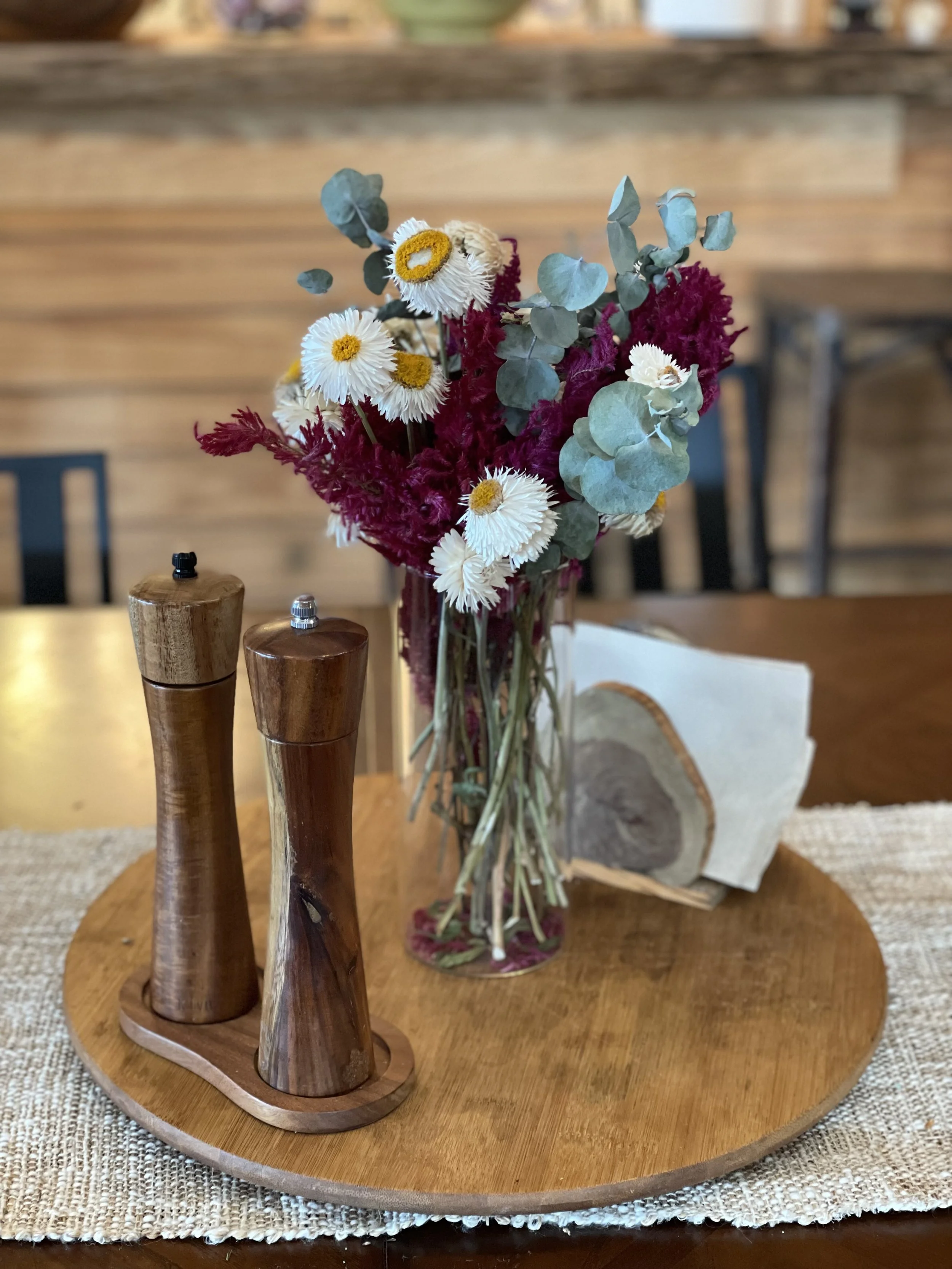
This time of year, as I’m standing out in the sleepy flower field, I can still feel the life tucked within; in seeds, roots, and even the dried petals that I’ll bring indoors. The last harvest is always a meaningful one, because I know that most of these blooms will go on to last for months to come, keeping my home filled with beauty even in the darkest months. Even after being cut, flowers have more to give. Dried flowers remind us that beauty isn’t about how long something lasts, it’s about how it continues to bring joy in new ways.
Drying flowers is a great way to hold on to the season. Long after the first frost, the color and the texture remain preserved- along with the memory. We save flowers to remember a moment that made us feel grounded and alive.
Dried flowers add warmth to winter, and soft color on gray days. They’re a reminder of the field when it’s sleeping.
How to Dry Flowers
Choose flowers that dry well: strawflower, statice, gomphrena, celosia, eucalyptus, sweet annie, and most grasses.
Cut the stems when the blooms are mostly open but not overripe.
Remove the lower leaves and tie into small bunches (if any are wet, let them dry out before storing).
Hang upside down in a cool, dark, well ventilated space (moisture brings mold).
Wait 2-3 weeks, and enjoy arranging!
It’s amazing how something that seems finished can still transform. A quiet lesson for us, too, as we move through seasons of change.
How to Arrange Dried Flowers
Start with a sturdy vase or basket, no water needed!
Use grasses or other foliage to create a base. I love sweet annie because it fills the space so well! Bonus that it smells so nice!
Add in your flowers in layers, mixing heights and textures for a natural, gathered look.
Tuck in smaller blooms or seed pods to fill any gaps, turning the vase as you work.
Display on a mantel or entryway table as a seasonal centerpiece!
Dried arrangements don’t require any perfection; a little wildness adds charm and authenticity to the seasonality of the arrangement.
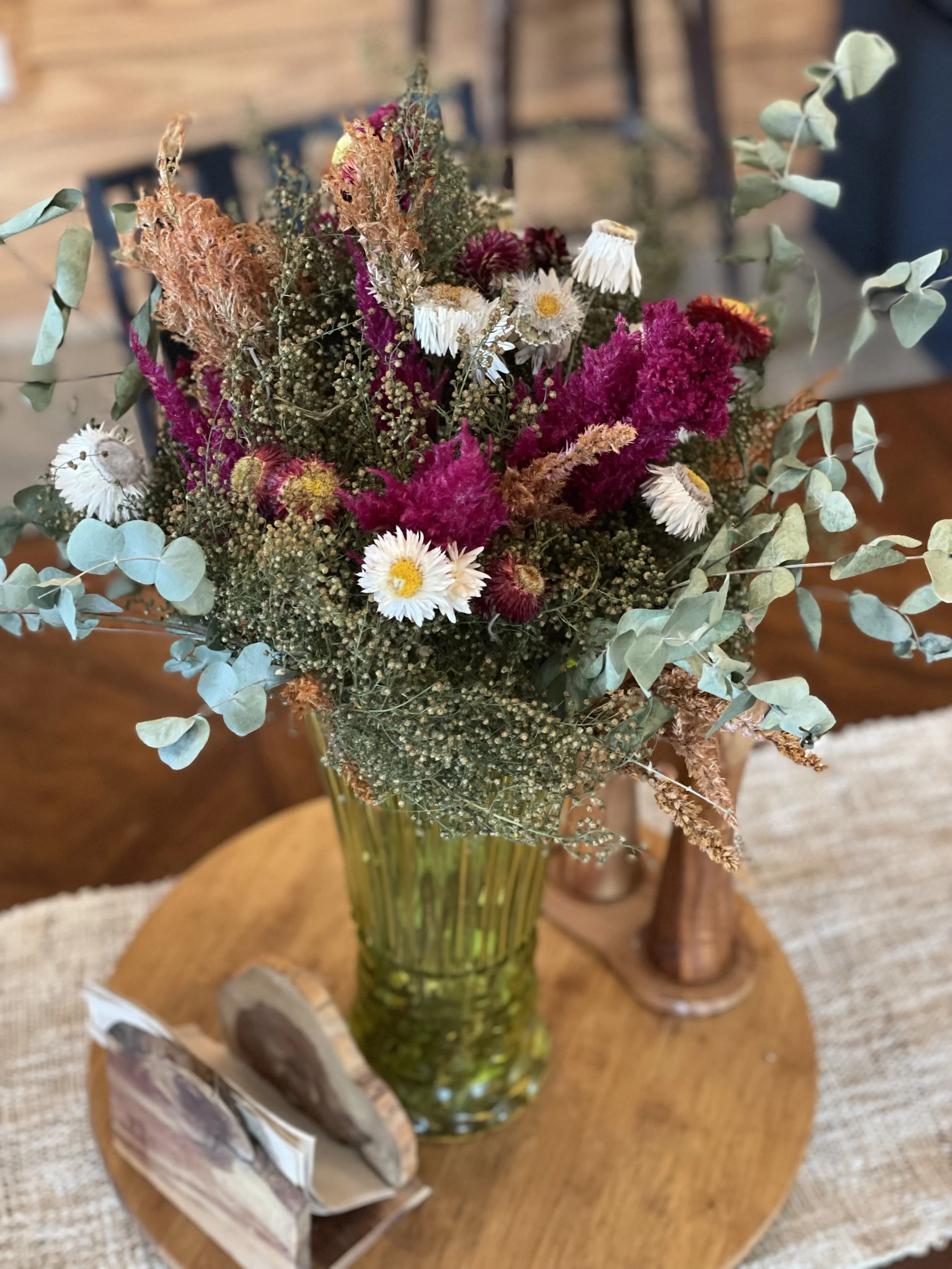
Even when life feels like it’s slowing down, there’s always something beautiful taking new shape, just like these blooms finding a second life.
The flowers may no longer be growing in the field, but their beauty can still fill the home with color and calm for months to come. The ending of the season isn’t really an ending, it’s a chance to see beauty differently. Even after being cut, there’s still life, color, and joy waiting to be shared!
